Friday, June 27, 2014

A Life of Pain


I loaded the bike into the Pathfinder and drove to Penn Forest Elementary School to meet Gary Roach, Floyd Muse and Brian Marshall for a training ride. The day was cold and blustery. We headed out to Boones Mill, Virginia via route 220 then turned on route 619 to climb Mount Cahais. The pace was rather quick. Floyd and Brian are fit right now. Gary and I are catching up. The terrain here in this section of Franklin County is steep rollers. All of us definitely paid our dues before hitting the climb. The ride details are as follows: Total time in saddle: 105 minutes. Total Distance: 26.63. Average speed: 15.1 MPH. Maximum speed: 43.4 MPH. Average Heart Rate: 134 BPM.
           
                        Thoughts:
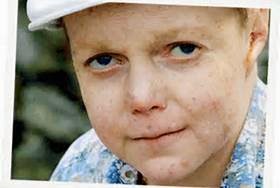
(Photo courtesy of www.jonnykenndy.northeast.org.uk)

           
      I spent most of my time on this ride thinking about the recent documentary I watched entitled “The Boy Whose Skin Fell Off.” Thirty-six year old Jonny Kennedy was the subject of the documentary, the program documented the final months of Jonny’s life as he suffered from the rare inherited condition known as dystrophic epidermolysis bullosa (EB or DEB). Jonny, a UK citizen, suffered from this genetic condition which causes the skin to blister and peel whenever it is touched or experiences any pressure. The condition is very debilitating. It forces the sufferer to live in a virtual “hell-on-earth.” What sucked me in, totally, was the spirit displayed by Johnny Kennedy during the filming of this documentary. For all the pain and suffering he and his mom had gone through during the 36 years of his life, his soaring, uplifting spirit was truly an inspiration.
During this training ride I reflected on the fact that the world has individuals like Jonny, living a life of brutal hell; yet through a resilience, displays the gift of the spirit in such a way that it gives strength to all who come in contact with them. On the other hand, the world has individuals with perfect health, who display a hateful and murderous spirit bent on spreading death and destruction. Life appears, at times, unfair. But is it really? People displaying a mean spirit, instigating death and destruction, will ultimately pay the price. I truly believe that Bad Karma is coming for these individuals, such that they will be blasted to the depths of hell.
Jonny’s spirit, on the other hand, is now experiencing a joy sublime, encased in the light and love of our creator. This, a result of the good karma developed through life trails of living 36 years with the monstrous condition of DEB.
Jonny talked about the spirit during the documentary and the way he spoke about indicated a deep belief in spiritualism. He also spoke about dreams and dreaming, reminding me of a recently read passage from Takuan Soho’s “The Unfettered Mind-Writings from a Zen Master to a Master Swordsman”:
“When we see things in the middle of a dream, although we do not see and hear then with the eyes and ears given to us at birth, we distinctly meet people, say things, hear things, see colors, and even have sexual relations. We wrestle with the things that concern us daily and, just as we think we are going to resolve our desires, wake up.
“It is upon awakening that we realize it was a dream. In the dream itself we never think, ‘this is a dream’ or ‘this is not real’.
“During a dream, this body is still alive and bound and cannot go to the places it would like. But with the strength of its own thoughts, it is able to see those places by drawing them to itself.
“When one truly dies and leaves his own body, he goes where he wants to go like a cat released from a string. Although one’s thoughts are the same as the thoughts in a dream, it is now as though he can go freely wherever he likes.
“In the midst of profound darkness or when the doors and windows are shut, one enters a state of freedom.  This is because he has no form.
“In this case, although there is a form, there is no corporeality, and it is like seeing the reflection of a lamp or the moon on water. There are no hindrances.

“With this body acting as a barrier, one cannot enter the inner-most shrine, but the mind can be conversant with that which is within, just as thoughts can pass through the Mountains of Silver or the Wall of Iron.① It is unlikely this mystery will be understood by the common run of men.”.” – Takuan Soho, “The Unfettered Mind-Writings from a Zen Master to a Master Swordsman”, trans. by William Scott Wilson [Kodansha: Tokyo. 1982] pg. 104-105. ① -Mountainous locations within China.

Friday, December 27, 2013

Spirit of the Way


     “The true kinship between Zen and the martial arts, Taisen Deshimaru explained, lies in the fact that both can lead us toward the ‘Spirit of the Way’. Any conflict, whether it takes place within the body and mind, or outside them, is always a battle against the self.”①-Taisen Deshimaru, The Zen Way to the Martial Arts, (London: Penquin-Arkana, 1982) 35.  I contend we can insert ‘competitive cycling’ in the place of ‘martial arts’ and arrive at a system whereby Soto Zen principles can be incorporated into the competitive cyclist’s training and racing.
        Master Deshimaru does offer one important qualifier with his statement, “I have nothing against sports [insert competitive cycling]; they [participants] train the body and develop stamina and endurance. But the spirit of competition and power that presides over them is not good; it reflects a distorted vision of life. The root of martial arts is not there…In the spirit of Zen and Budo [‘the way of war’] everyday life becomes the contest. There must be awareness at every moment-getting up in the morning, working, eating, and going to bed. That’s the place for the mastery of self.”② Ibid, pg.35
             I believe there’s much that can be taken from this philosophy and applied to the discipline of competitive cycling. I hold the “warrior” spirit to be an important component to the competitive cyclist’s mental approach to the sport.

Sunday, December 22, 2013

Weak Points


Deshimaru
   I’ve been thinking on much I’ve been reading in Taisen Deshimaru’s “The Zen Way to the Martial Arts” [Penguin: New York, 1982.]  The Zen Master speaks to basic principles I find appealing to the competitive cyclist. For example, in discussing the value of concentration he states, “You must not show your weak points, either in [competitive cycling-my substitution for ‘martial arts’] or in everyday life. You must remain concentrated and not reveal your defects; through continuous training in self-control, gradually you discard them. The traditional Japanese education is based entirely on this form of vigilance-never show your weak points, so other people will not be able to take advantage of them.” –③ Ibid, pg. 35. In a cycling race, it is to my advantage to discover my opponent’s weak points. The method, as articulated by Taisen Deshimaru, is based on attentiveness, determination, and focused concentration. Once achieved, when the opportunity presents itself, one can then “leap upon the opponent’s weak point(s) without a thought.” ④ Ibid, pg. 35.
        During a cycling race I pay close attention to my race opponent. I observe their position on the bike, the cadence of their pedal stroke, their eyes when not covered by colored lenses, the rate and labor of their breathing, and any twitching of their back or legs. Each of these elements will point to my opponent’s potential weaknesses or, in the case of twitching, if they are getting ready to launch an attack. For example, during a race, if you can watch an opponent’s eyes; and their eyes move, or are unclear, hesitate, show doubt, waiver, there’s the ‘suki’, opportunity, the opponent’s flaw.”⑤ Ibid, pg. 35. In the critical moments of the race, we must not show our weak points; because if we do we will make mistakes, we will stumble and fall and be defeated.
        Deshimaru states, “…this form of vigilance cannot come from constant bodily tension, for the body would soon wear out; it must come from the attentiveness of mind. From which one can focus on the importance of ‘Shin’, or ‘Spirit’. The body manifests the weak points, but the mind can rectify, channel and direct them.” ⑥ Ibid, pg.35


In the Spirit

   To be able to stroke the pedal ‘spiritually’ hour after hour, that is, with a kind of effortless strength, is no very startling achievement. And yet I’m well content, for I understand why the way of the cycling warrior must incorporate a method to weaken an attacking opponent's resolve. By unexpectedly giving way, with effortless resilience, to a passionately delivered attack by staying glued to his wheel and thus turn his own strength against him.  This missive adapted from a passage taken from Eugen Herrigel, “Zen in the Art of Archery” (New York: Random House) 1989.

Kokoro

    Walking a desert trail in the vicinity of the newly laid rail of the Union Pacific Railroad in the southwest, a Japanese laborer named Tazo comes upon a Navajo Indian by a fire next to a fork in the path as it turned south. The Navajo speaks to Tazo saying, “You’re not American!” Tazo replies, “No I’m not, but why do you care?” The Navajo answers, “The Americans are crazy!” They say they think with their heads. No sane man thinks in the head.” Tazo gazes down at the weathered Sage and smiles as the Navajo goes on to say, “You and I are different, I know!” “We think in the heart.” – adapted from a reference to a C. G. Jung mimeographed report of five lectures given under the auspices of the Institute of Medical Psychology in London in 1935 as published in D. T. Suzuki’s “Zen and Japanese Culture” (Princeton: Princeton University Press, 1973). 185.

    In applying the principles of Zen to mental training for cycling competition, I’ve been studying the Bushido culture of feudal Japan. The great 17th century Samurai swordsman, Miayamoto Musashi, would understand the exchange between Tazo and the Navajo as it deals with the Japanese term kokoro.  “Kokoro is a very comprehensive term. It first of all means the physical ‘heart’, and then the true ‘heart’ (conative and emotional), ‘mind’ (intellectual), ‘soul’ (in the sense of an animating principle), and ‘spirit’ (metaphysical). In the case of the swordsman, the kokoro has rather a conative sense; it is the will in its deeper significance.

   “In distinguishing two kinds of kokoro: one is the physical ‘heart’ and the other is the ‘true’ heart. The heart susceptible to emotionality is the first kind. When it is kept down below the navel, it becomes immovable. Unless this takes place, all the skill the swordsman may have acquired is of no use.” ① Ibid, pg. 185.  So to benefit from this application of kokoro, we must center ourselves on the “true” heart, moving our thoughts and actions away from all “emotionality.” But how is this accomplished?

   Miyamoto Musashi writes in his “Book of Five Rings”, “In the science of martial arts, the state of mind should remain the same as normal. In ordinary circumstances as well as when practicing martial arts, let there be no change at all-with the mind open and direct, neither tense or lax, centering the mind so that there is no imbalance, calmly relax your mind, and savor this moment of ease thoroughly so that the relaxation does not stop its relaxation for even an instant.

   “Even when still, your mind is not still; even hurried, your mind is not hurried. The mind is not dragged by the body; the body is not dragged by the mind. Pay attention to the mind, not the body. Even if superficially weak-hearted, be inwardly strong-hearted, and do not let others see into your mind.” Miyamoto Musashi, trans. by Thomas Cleary “The Book of Five Rings” (Boston: Weatherhill, 2006) cover.

    This is a technique I am applying to the rigors of training and racing.

Friday, November 30, 2012

Cycling Zen

    The ancient Zen Masters wrote of a unique warring spirit necessary to carry samurai warriors through battles unscathed. These principles have been handed down through the years to practicing Buddhist monks of the various temples scattered throughout Japan.  A fine reference work on "Zen and Japanese Culture" is found in the publication of the same name authored by Daisetz Suzuki. [Suzuki, Daisetsz. Zen and Japanese Culture. Princeton, New Jersey: Princeton University Press, 1970.]
 
   From this and other works, we find certain principles adaptable to athletes in many sporting disciplines, especially competitive cycling.  For example, Gichin Funakoshi (1868-1957), the father of modern karate, established his 20 precepts  of Karate-Do. Funakoshi, born in Okinawa, was one of the first Okinawan Masters to teach karate on the Japanese mainland.  Following the teachings of Anko Itosu, he founded the Shotokan School of Karate in 1922 in Tokyo. 
 
   In reviewing 20 Precepts, the cycling athlete may apply Funakoshi's philosophy to his own discipline to gain a mental edge in training and racing. Those with direct application have been set in bold type (or one may just replace karate with a specific sporting discipline such as competitive cycling).
  1. Karate begins with courtesy and ends with courtesy.
  2. There is no first attack in Karate.
  3. Karate is an aid to justice.
  4. First control yourself before attempting to control others.
  5. Spirit first, technique second.
  6. Always be ready to release your mind.
  7. Accidents arise from negligence.
  8. Do not think that Karate training is only in the dojo.
  9. Karate is a lifelong pursuit.
  10. Think of your hands and feet as weapons.
  11. Put your everyday living into Karate and you will find "myo" (subtle secrets).
  12. Karate is like boiling water. If you do not heat it constantly, it will cool.
  13. Do not think about winning; think about not losing.
  14. Victory depends on your ability to distinguish vulnerable points from invulnerable ones.
  15. Wage the battle with natural strategy.
  16. When you walk out the door, think that you have numerous opponents waiting for you. It is your behavior that invites trouble from them.
  17. Beginners must master low stance and posture; natural body positions are for the advanced.
  18. Practicing a Kata is one thing, engaging in a real fight is another.
  19. Do not forget to correctly apply: strength and weakness of power, stretching and contraction of the body and slowness and speed of techniques.
  20. Always think and devise ways to live the precepts every day.

   "The ultimate aim of Karate lies not in victory nor defeat, but in the perfection of the character of its participants." ---- Gichen Funakoshi

Sunday, March 18, 2012

Bike Sebring 12-Hour Race

   On February 18, 2012, I participated in my second ever 12-hour bicycle race. Sanctioned by the Ultra Marathon Cycling Association, the event was held in Sebring, Florida, with the start at the famed Sebring  Race Track.  This was my first12-hour (drafting) in the 60 - 64 age bracket.
  The 6:30 a.m. start found the raceway and environs bathed in a thick fog. What a way to start a race! I was happy to have the required lights attached to my Ridley Noah-RS.  Looking around the start line I  must have been among the elite of the Ultra world.  With this being a RAAM qualifier, 24-hour, and 12-hour event, we had close to 200 racers.  There were HPV's, recumbent, and regular bikes under the strong, calm legs of the contestants.  As a newcomer to the Ultra scene, I did not know the names of the big-guns, but I did notice the reverence paid to certain riders by the race officials and other contestants.  I was directly behind a World Champion jersey on the start line with Monaco labeled on the back, his support team fluttering around him.  I muttered, "This could be very interesting" to nobody in particular as the race director barked instructions into his megaphone.
   We were to ride 3 laps around the race track.  Each lap at 3.7 miles would send us out on to the road course with 11.1 miles recorded.  The road course was an out and back trek registering approximately 45 miles each way.  Upon return to Sebring, we were to shift to a 12 mile road loop course.  At 5:30 pm, racers would shuttle back on to Sebring race track to complete either their 12 hours or continue on through the night for 24 hours.
  This being my first experience with a drafting event, my tactics were rather straight forward; draft in a group of riders with equal capability.  The wind being a factor at this time of the year in Florida, it was very important not to waste energy pushing it.
   With the heavy fog, the start was rather hairy.  The pace car took a wrong turn on the race track and a number of riders were immediately off course.  I ended up in the second group pace-line, about 50 seconds behind the lead pack at the turn-around on the road course.  This was an excellent position to be in. My computer reflected 56 miles completed in just over 2 hours.  Then reality hit with my having to take time to urinate.  I lost the draft and found myself solo, pushing the wind until linking up with two recumbent riders. Living and training in the mountains of Southwest Virginia we do not see many recumbent style bicycles.  Drafting behind these machines proved beneficial to a higher average speed. They flew down the road.  What a strange site, I imagined it to be, a regular bike trading pulls with two recumbents.  With the three of us hammering I noted hitting the century mark right under 4 hours and 28 minutes.  Not a bad average speed, but I had hopes of bettering 22.4 MPH for 100 miles.

   I took stock of where I was at physically. All things considered I felt pretty good.  Coming into Sebring Race track to start the 12 mile loops, as my electronic chip chirped as it crossed the timing pad, it was  sobering to realize I had 7 hours and 32 minutes remaining in the race. Could I maintain the level of effort it was going to take to match the mileage necessary to place in my age category?  I emptied my mind of this thought and pressed on, ever mindful of the need to stay out of the wind.  Not having support, I had to stop at the truck and restock fluids and food.  This again cost me time and a wheel.  Losing time pushing the wind, I was forced to bridge up to riders already on the course. Nestled into the draft 2 other riders and recovering, I realized this was a good group and started sharing the effort.  Then I realized that if you take a pull, some riders will bank on your charity and not pull through upon completion of your effort.  Not wanting to play this game, we finally shamed the rider into sharing the work load. 

  Upon completion of the second lap, I developed a "hot-foot" problem and had to stop at the truck and massage my feet with "Kool-n-Fit", change socks, and reload bottles into the cages and food into the pockets. This along with a "bio" break, cost me major time.  I never caught a group of riders to draft and rode almost an entire lap solo.  Thankfully, on the remaining laps, I rode in a group of at least one or more racers.  This was important as the bank account was dwindling a bit and I wanted to have enough money in the account to finish well.

  I was out on the road course when that 5:30 p.m. arrived and my riding partner, Rick, commented we would be funnelled to the track the next time we crossed the timing mat.  What a great feeling to realize you had one more hour to ride and your effort would be applauded by the fans gathered along the checkered start/finish line at Sebring Raceway!  With the sun gradually setting, I was fortunate to link up with the compatriot and fellow travel companion responsible for bringing me into Ultra Marathon Racing.  Wes Wilmer and I finished the 12 hour race together!

   At the awards ceremony immediately following the 12-hour race, medals were handed out to the top three finishers in each category. Wes collected first place honors in the 55 - 59 age bracket with 241 miles.  I garnered third place in the 60 - 64 age group with 217 miles.

  In review, my performance in this event was hampered by too much time off the bike. Losing 42 minutes out of 12 hours cost me 12 to 15 miles. I have to improve in this area. Ed Burkes words are echoing loudly in my head, "Champions adopt training procedures that match racing situations as closely as possible....." It is time for me to heed these word.  Calvin's Challenge is less than two months away.